
PLANTER FASCIITIS
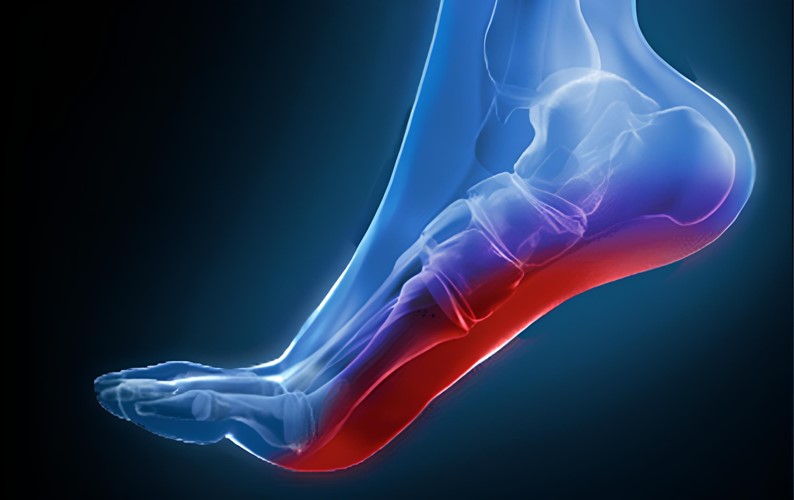
The calcaneus (heel bone) is the largest bone in the foot and absorbs the most amount of shock and pressure. Calcium deposits form when the plantar fascia pulls away from the heel area, causing a bony protrusion, or heel spur. The plantar fascia is a broad band of fibrous tissue located along the bottom surface of the foot that runs from the heel to the forefoot. Heel spurs can cause extreme pain in the rearfoot, especially while standing or walking.
CAUSE
Heel spurs develop as an abnormal growth in the heel bone due to calcium deposits that form when the plantar fascia pulls away from the heel. This stretching of the plantar fascia is usually the result of over-pronation (flat feet), but people with very high arches can also develop heel spurs. Women have a significantly higher incidence of heel spurs due to the types of footwear often worn on a regular basis.
When the cause is over-pronation (flat feet), an orthotic with rearfoot posting and longitudinal arch support is an effective device to reduce the over-pronation, and allow the condition to heal. Other common treatments include stretching exercises, losing weight and wearing shoes that have a cushioned heel that absorbs shock.
Rifat TOPCUOGLU M.D.
