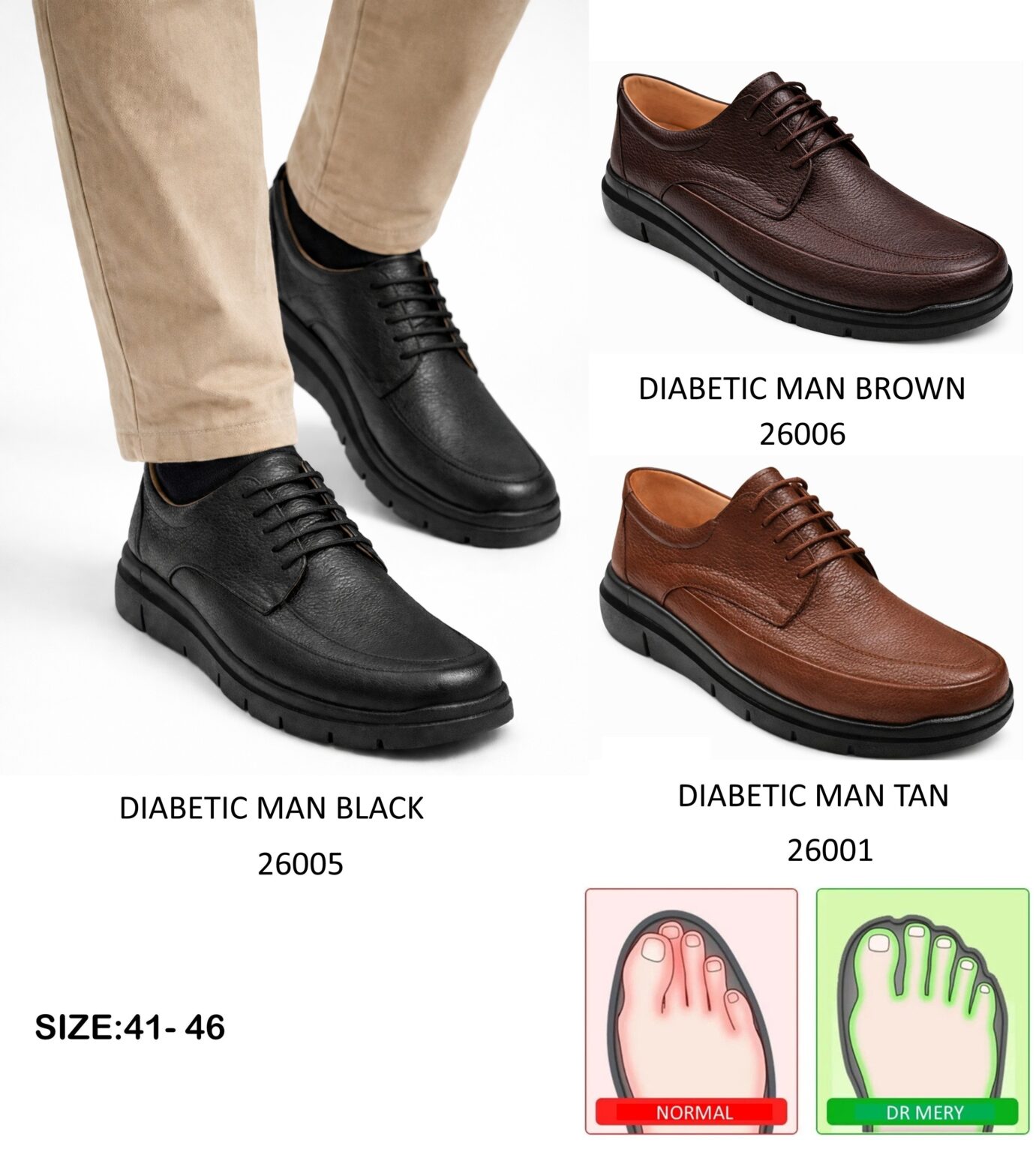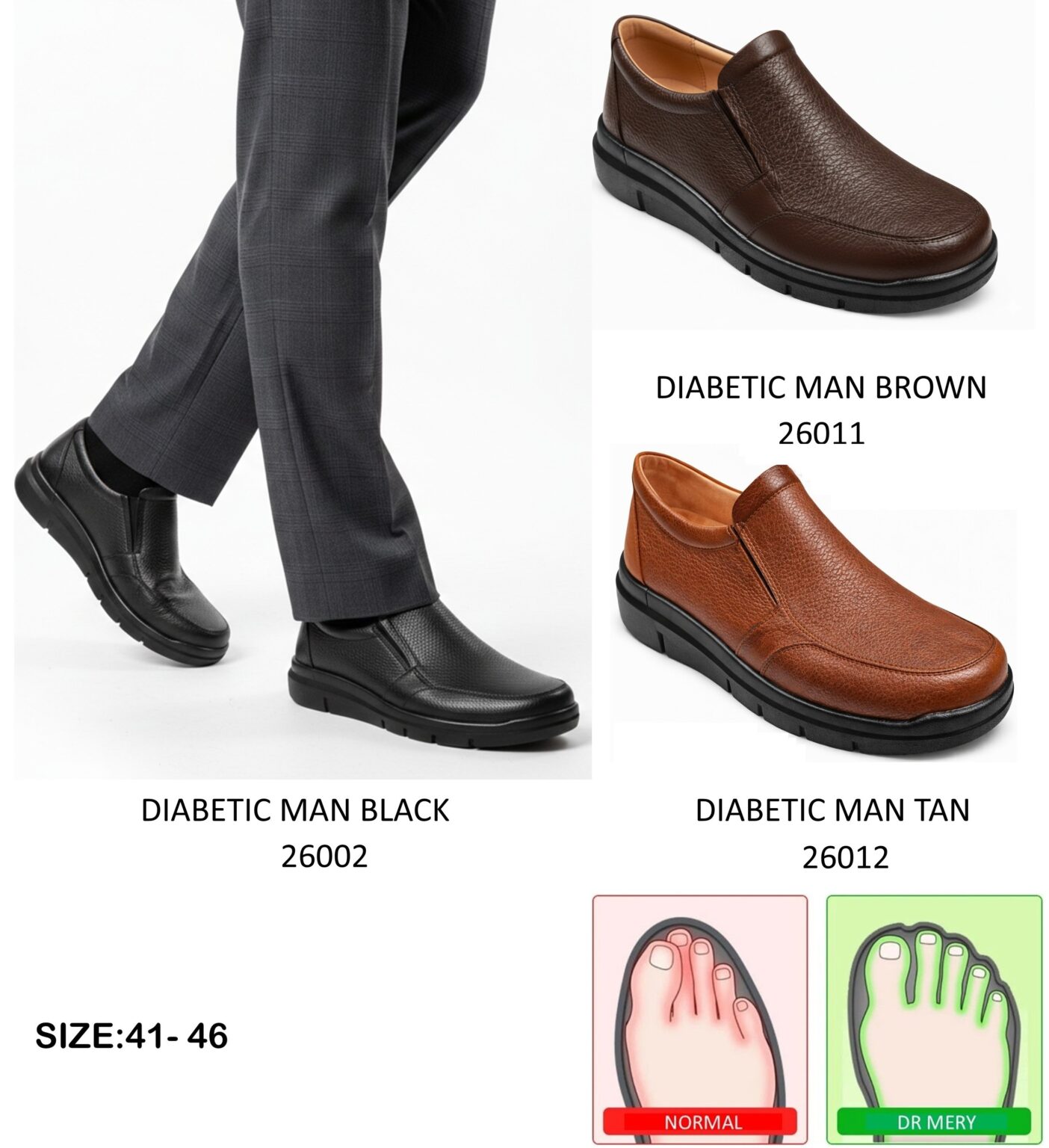
DIABETIC

Diabetes is a chronic disease in which the body’s ability to produce or use the hormone insulin is impaired. Insulin is a hormone that regulates blood sugar. Diabetes makes it difficult for the body to use glucose (sugar) for energy, causing blood sugar levels to rise uncontrollably. There are three main types: Type 1 diabetes, Type 2 diabetes, and gestational diabetes.
Managing diabetes is crucial to prevent complications like heart disease, kidney failure, and nerve damage.
The Effects of Diabetes on Foot Health are Quite Serious. High blood sugar levels can lead to nerve damage (diabetic neuropathy) and circulation issues over time, putting foot health at risk. These conditions can make injuries and infections more likely and harder to heal.
Suggestions for Protecting Foot Health:
- Check your feet daily to notice any injuries early,
- Avoid soaking feet in hot water and be careful of burns,
- Keep feet clean and moisturized, but dry them properly to prevent moisture buildup,
- Choose comfortable, protective shoes rather than tight, narrow shoes,
- Keep blood sugar levels under control.
Diabetic Shoes are specifically designed to protect the foot health of diabetic patients. The main goal of these shoes is to protect the feet from skin damage caused by wounds, friction, and pressure, thereby reducing the risk of diabetes-related complications. Key features of diabetic shoes include:
- Wide and Deep Design:
- Seamless Interior:
- Extra Support and Cushioning:
- Soft and Breathable Materials:
- Removable Insole:
- Shock-Absorbing Sole:
- Non-Slip Sole:
The Importance of Diabetic Shoes: Diabetic shoes offer significant protection, especially for diabetic patients with neuropathy or circulation issues. Choosing suitable diabetic shoes helps protect foot health and greatly reduces the risk of wounds and infections.
Rifat TOPCUOGLU M.D.