
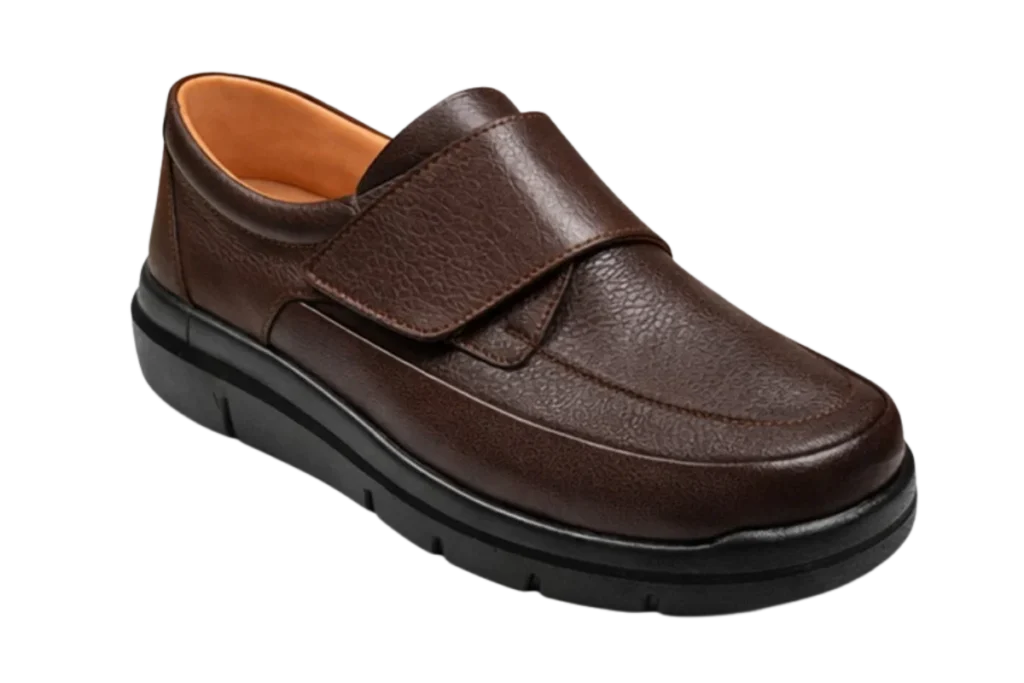
Choosing the right footwear is important for everyday comfort, mobility, and foot health. For people who spend long hours standing, experience discomfort in conventional shoes, have sensitive feet, or require additional support, orthopedic shoes can provide a more suitable footwear solution.
However, not every shoe marketed as “comfortable” or “orthopedic” offers the same level of support. Selecting the right orthopedic shoe requires more than simply choosing a soft sole or a larger size.
Factors such as shoe width, toe box space, sole stability, cushioning, heel support, materials, adjustability, foot shape, and intended use should all be considered.
Under the leadership of Specialist Dr. Rıfat Topçuoğlu, Dr. Mery has been producing orthopedic and diabetic shoes since 2010, with a focus on combining functional footwear design with everyday comfort.
In this guide, we explain what to look for when choosing orthopedic shoes and how to identify footwear that better matches your individual needs.
1. Start With the Correct Shoe Size
One of the most important factors when choosing orthopedic footwear is selecting the correct size.
A shoe that is too small can create unnecessary pressure on the toes, sides of the foot, and heel. A shoe that is too large, on the other hand, may allow excessive movement inside the footwear and reduce stability.
It is important to remember that shoe size can change over time.
Age, weight changes, pregnancy, swelling, foot structure, and daily activity can all affect how a shoe fits. For this reason, you should not automatically assume that the size you have worn for years is still the ideal size.
When trying orthopedic shoes, make sure that:
- Your toes are not compressed.
- Your heel does not move excessively.
- There are no painful pressure points.
- The shoe feels secure without being tight.
- There is enough space for natural foot movement.
The shoe should feel comfortable from the beginning rather than requiring a long and uncomfortable “breaking-in” period.
2. Pay Attention to Shoe Width
Correct width is just as important as correct length.
Many people purchase larger shoes because their existing footwear feels tight, when the actual problem is insufficient width.
This can lead to poor fit and unnecessary movement inside the shoe.
A properly selected orthopedic shoe should match the natural width and volume of the foot.
People with wider feet, swelling, bunions, prominent joints, or certain foot deformities may require footwear with additional internal space.
A wider design does not necessarily mean that the shoe should feel loose. The objective is to provide sufficient room without sacrificing stability.
When choosing orthopedic shoes, consider not only your standard size but also whether your feet require a wide or extra-wide fit.
3. Look for a Spacious Toe Box
The front section of the shoe is commonly referred to as the toe box.
A well-designed orthopedic shoe should provide enough space for the toes to rest naturally without being compressed together.
A narrow or pointed toe box can create excessive pressure, particularly during long periods of standing or walking.
Adequate toe space may be particularly important for people with:
- Wide feet
- Sensitive toes
- Bunions
- Hammertoes
- Swelling
- Diabetic foot-care requirements
- Other structural foot differences
The toes should have enough space to move naturally while the overall shoe remains secure.
A wider toe box can also help reduce friction between the toes and the interior surfaces of the footwear.
4. Check the Sole for Stability
Many people assume that the softest shoe is automatically the best orthopedic shoe. This is not always the case.
A good orthopedic sole should provide an appropriate balance between cushioning, flexibility, and stability.
A sole that is excessively soft may not provide enough stability for some users. At the same time, an overly rigid sole may feel uncomfortable and restrict natural movement.
The ideal construction depends on the wearer and the intended use.
For daily walking, for example, the sole should generally provide sufficient shock absorption while maintaining a stable base.
A well-designed outsole can also contribute to better traction and help provide confidence during everyday movement.
When evaluating the sole, consider:
- Cushioning
- Stability
- Flexibility
- Thickness
- Traction
- Shock absorption
- Durability
The goal should be controlled, comfortable movement rather than simply maximum softness.
5. Consider Arch and Foot Support
The structure of the shoe should provide appropriate support for the foot.
However, there is no universal arch design that is suitable for everyone.
Some people have low arches, while others have higher arches or different structural requirements. For this reason, orthopedic shoes should not be selected based only on claims such as “maximum arch support.”
The right amount and position of support should correspond to the individual foot.
If you use custom orthotics or professionally recommended insoles, choose shoes that have enough internal volume to accommodate them properly.
In many cases, removable insoles can make orthopedic shoes more versatile because the original footbed can be removed when another insole needs to be inserted.
For specific orthopedic requirements, professional evaluation is recommended.
6. Evaluate Heel Support
The heel section plays an important role in the overall stability of footwear.
A well-constructed heel area can help keep the rear of the foot more securely positioned inside the shoe.
When walking, excessive heel movement can cause friction and reduce the feeling of stability.
When trying on orthopedic shoes, check whether the heel is held comfortably in place without excessive pressure.
The back of the shoe should not constantly rub against the heel or allow significant slipping.
A supportive heel structure is particularly valuable in footwear intended for extended daily use.
7. Choose Adjustable Closures When Necessary
Feet do not always remain exactly the same size throughout the day.
Some people experience swelling after standing or walking for several hours. Others may have differences between their left and right feet.
Adjustable orthopedic footwear can help accommodate these variations.
Common fastening systems include:
- Traditional laces
- Velcro straps
- Adjustable straps
- Elasticated sections
- Combination closure systems
Adjustability allows the shoe to be tightened or loosened according to the wearer’s needs.
This can be especially useful for older adults, people with limited mobility, people with swelling, and users of diabetic footwear.
The closure system should also be easy for the wearer to operate independently whenever possible.
8. Examine the Interior of the Shoe
The inside of a shoe is just as important as its appearance.
Internal seams, hard edges, rough materials, or poorly positioned components can create friction and pressure.
This is especially important for people with sensitive feet.
High-quality orthopedic and diabetic footwear may be designed with smoother internal surfaces and carefully positioned seams to improve comfort.
Before purchasing a shoe, inspect the inside with your hand.
Check for:
- Rough stitching
- Hard edges
- Uneven surfaces
- Excessively rigid sections
- Areas that may create friction
- Limited toe or forefoot space
People with reduced sensation in their feet may not immediately notice pressure or friction, making careful footwear selection particularly important.
9. Choose Breathable and Appropriate Materials
Material quality influences comfort, durability, flexibility, and temperature management.
Depending on the design, orthopedic shoes may be manufactured using leather, textile materials, technical fabrics, or combinations of different materials.
Good footwear materials should generally provide an appropriate balance of:
Flexibility: The upper should accommodate natural movement without becoming unstable.
Durability: Daily footwear should withstand repeated use.
Breathability: Proper airflow can contribute to a more comfortable internal environment.
Softness: Areas in contact with sensitive parts of the foot should not create unnecessary friction.
Natural and high-quality technical materials can both be effective when used in a properly designed shoe.
Material selection should therefore be evaluated together with the complete construction of the footwear.
10. Consider How Long You Stand or Walk
Your daily routine should influence your footwear decision.
Someone who wears shoes for only a few hours each day may have very different requirements from a healthcare professional, teacher, retail employee, factory worker, or another person who spends most of the day standing.
If you are on your feet for long periods, consider orthopedic footwear designed to provide:
- Stable support
- Adequate cushioning
- Comfortable internal space
- Secure heel positioning
- Breathability
- Durable sole construction
Similarly, if you walk long distances, the weight and flexibility of the shoe may become more important.
The right orthopedic shoe should support your actual lifestyle rather than simply look comfortable in a product photograph.
11. Do Not Ignore the Weight of the Shoe
Heavy footwear can become tiring during extended use.
Orthopedic construction does not necessarily mean that the shoe must be bulky or excessively heavy.
Modern materials and production methods make it possible to combine supportive structures with relatively lightweight designs.
When comparing models, consider how the shoe feels after walking rather than evaluating it only while standing still.
A shoe that feels acceptable for one minute may feel very different after several hours of use.
12. Consider Removable Insoles
Removable insoles are an important feature in many orthopedic shoes.
They can provide additional flexibility for people who:
- Use custom-made orthotics
- Require additional depth
- Prefer different cushioning levels
- Need to replace the original insole over time
Before inserting another insole into a shoe, make sure there is sufficient space.
Adding an additional insole without removing the original one may reduce internal volume and create excessive pressure.
For people with specific orthopedic requirements, the compatibility of the shoe and orthotic device should be evaluated appropriately.
13. Choosing Orthopedic Shoes for People With Diabetes
People with diabetes may require additional consideration when selecting footwear.
Diabetes can affect foot sensation, circulation, skin condition, and healing in some individuals. As a result, pressure points, friction, or poorly fitting shoes may become especially important concerns.
Depending on individual requirements, diabetic footwear may include:
- Extra internal depth
- Wider fitting options
- Smooth interior surfaces
- Reduced internal seams
- Adjustable closures
- Comfortable cushioning
- Protective toe space
- Removable footbeds
The primary objective is to provide a comfortable and accommodating footwear environment.
However, diabetic shoes should not replace professional medical foot care.
People with diabetes should regularly inspect their feet and consult an appropriate healthcare professional if they notice wounds, persistent redness, swelling, changes in sensation, or other concerning symptoms.
14. Try Shoes at the Right Time of Day
Feet may become slightly larger or more swollen as the day progresses.
For this reason, trying shoes later in the day can sometimes provide a more realistic understanding of how they will feel during normal daily use.
Wear the type of socks you normally use and walk around in both shoes.
Do not evaluate the fit based on only one foot because many people have slight differences between their feet.
The shoe should accommodate the larger or more demanding foot comfortably.
15. Do Not Choose Orthopedic Shoes Based on Appearance Alone
Modern orthopedic shoes can be stylish, elegant, and suitable for everyday use.
However, design should not take priority over functionality.
A shoe may look attractive but still be too narrow, too rigid, unstable, or unsuitable for your specific requirements.
When comparing orthopedic shoe models, prioritize:
Fit → Support → Comfort → Function → Materials → Appearance
Ideally, a well-designed orthopedic shoe should combine all of these characteristics.
16. Give Priority to Your Individual Needs
There is no single orthopedic shoe that is perfect for everyone.
One person’s ideal shoe may not be suitable for another person because feet differ significantly in structure, width, volume, sensitivity, and support requirements.
Your footwear requirements may also depend on:
- Age
- Occupation
- Daily activity
- Foot structure
- Existing orthotics
- Swelling
- Previous injuries
- Medical conditions
- Walking habits
For this reason, orthopedic footwear should always be selected according to individual requirements rather than general recommendations alone.
If you have persistent foot pain, a diagnosed orthopedic condition, diabetes, significant deformity, loss of sensation, or another medical concern, consult an appropriate healthcare professional for personalized advice.
Why Choose Dr. Mery Orthopedic Shoes?
Experience is an important consideration in specialized footwear production.
Dr. Mery, under the leadership of Specialist Dr. Rıfat Topçuoğlu, has been producing orthopedic and diabetic shoes since 2010.
Founded by Specialist Dr. Rıfat Topçuoğlu, Dr. Mery combines years of experience in orthopedic and diabetic footwear with a focus on functional design, supportive construction, comfort, and practical everyday use.
Whether you are looking for orthopedic shoes, diabetic shoes, wide-fit footwear, supportive daily shoes, or comfortable footwear for extended use, choosing the right model starts with understanding your individual needs.
For more information about Dr. Mery products and available orthopedic and diabetic footwear solutions, you can contact our team.
Dr. Mery Medical Shoes
Bornova, Izmir
Phone: +90 532 215 28 39
E-mail: info@drmeryshoes.com
Frequently Asked Questions About Choosing Orthopedic Shoes
1. How do I know if an orthopedic shoe fits correctly?
An orthopedic shoe should feel secure but not tight. Your toes should have enough room to move naturally, your heel should remain reasonably stable, and the shoe should not create painful pressure or rubbing anywhere on the foot.
2. Should orthopedic shoes be one size larger?
Not necessarily. Choosing a larger size simply to gain more width can result in an incorrect fit. The correct approach is to choose the appropriate combination of length, width, and internal volume.
3. Should orthopedic shoes have a wide toe box?
A spacious toe box is an important feature for many users because it allows the toes to rest more naturally and reduces unnecessary compression. The required width depends on the individual’s foot shape.
4. Is a very soft sole better for orthopedic shoes?
Not always. A good orthopedic shoe should provide an appropriate balance of cushioning and stability. Excessively soft soles may not provide sufficient support for every user.
5. Are removable insoles important in orthopedic shoes?
Removable insoles can be beneficial, especially for people who use custom orthotics or require additional internal depth. They also make it easier to adapt footwear to different needs.
6. What shoes should people who stand all day choose?
People who spend long hours standing should generally look for footwear with good fit, stable sole construction, adequate cushioning, heel support, sufficient toe space, and breathable materials.
7. Can orthopedic shoes be stylish?
Yes. Modern orthopedic footwear can combine functional construction with contemporary designs. Supportive shoes do not necessarily need to have a traditional clinical appearance.
8. What should people with diabetes consider when choosing shoes?
People with diabetes should pay particular attention to fit, internal seams, pressure points, toe space, adjustability, and overall foot protection. Individual medical requirements should be discussed with an appropriate healthcare professional.
9. How often should orthopedic shoes be replaced?
There is no universal replacement period. It depends on usage frequency, walking habits, body weight, material quality, and sole wear. Shoes should be evaluated regularly and replaced when cushioning, stability, fit, or structural integrity noticeably deteriorates.
10. Where can I get information about Dr. Mery orthopedic and diabetic shoes?
You can contact Dr. Mery Medical Shoes in Bornova, Izmir for information about orthopedic and diabetic footwear models. Dr. Mery has been producing specialized footwear since 2010 under the leadership of Specialist Dr. Rıfat Topçuoğlu. For product information, call +90 532 215 28 39 or email info@drmeryshoes.com.